
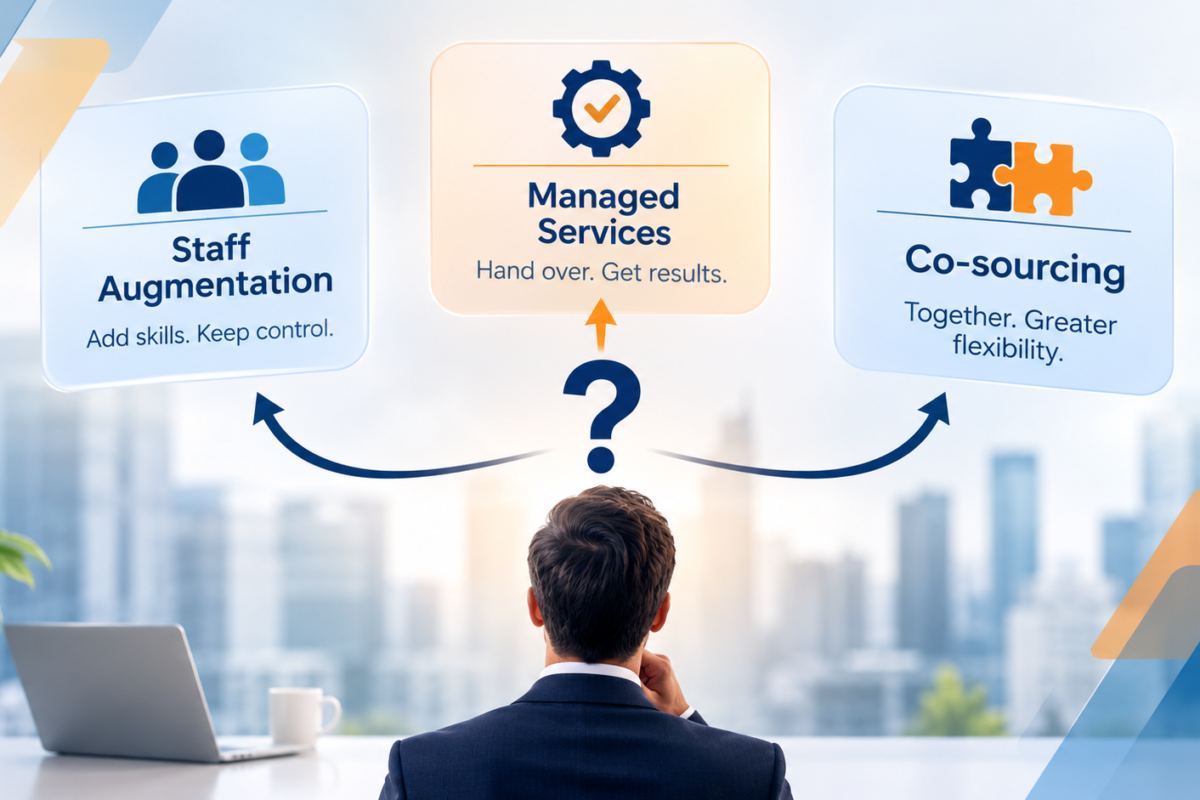
Key takeaways Staff augmentation adds people to your team; you direct the work and carry the delivery risk. Managed services hand a defined service to a provider, who is accountable for the result. Co-so...
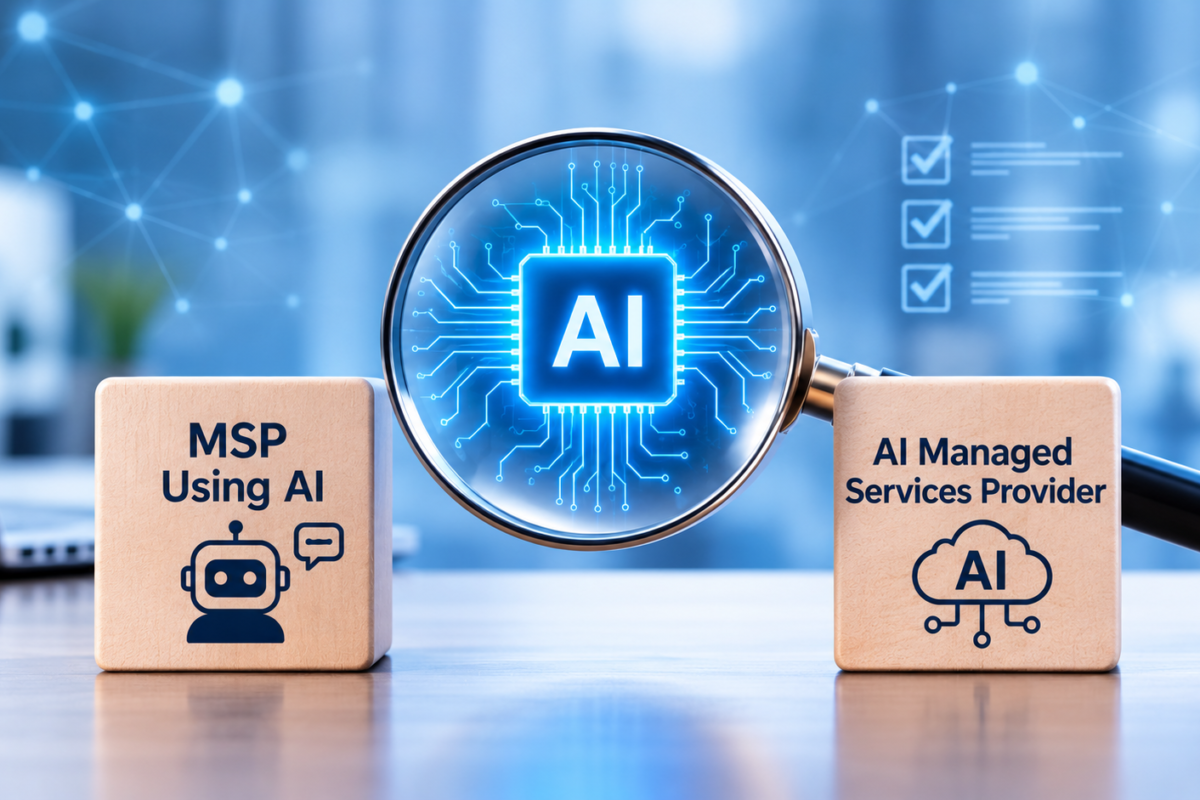
Key takeaways AI washing is exaggerating or misrepresenting how much a product or service actually uses AI. Regulators in the US have already taken action over it. In IT services, AI washing usually looks l...


Key takeaways Build-Operate-Transfer (BOT) is a model where a partner builds a capability, runs it until it’s mature, then hands ownership to you. For a global capability centre (GCC) in India, BOT gives yo...
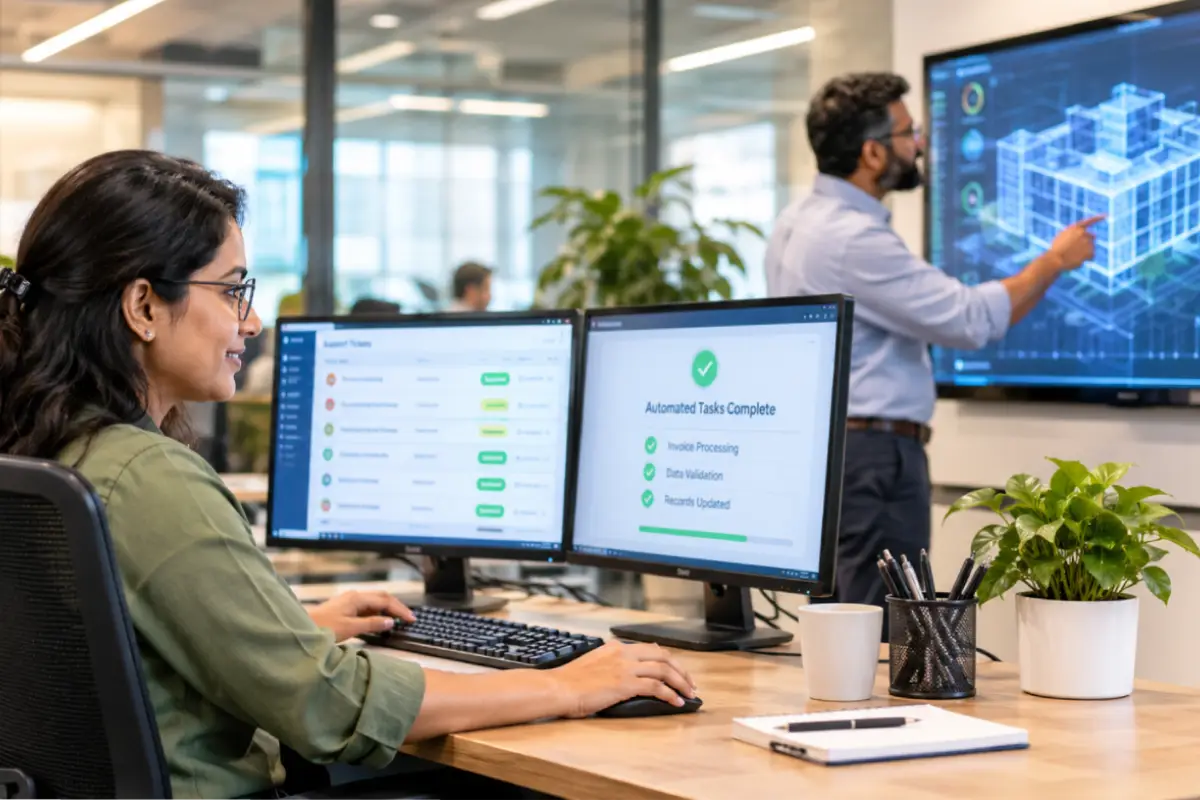
Key takeaways A digital worker is software that carries out a defined piece of work end to end, such as resolving a password reset or processing an invoice. It does tasks; it isn’t a person. A digital twin ...

Key takeaways Service desk automation means routine IT tickets are resolved end to end by digital workers, not just routed faster. The measure that matters is how many tickets close with no human involvement. ...

Key takeaways A vCIO (virtual CIO) is a strategic IT advisor, usually supplied as part of a managed services contract, who plans your technology roadmap and budget from outside the business. A fractional CI...
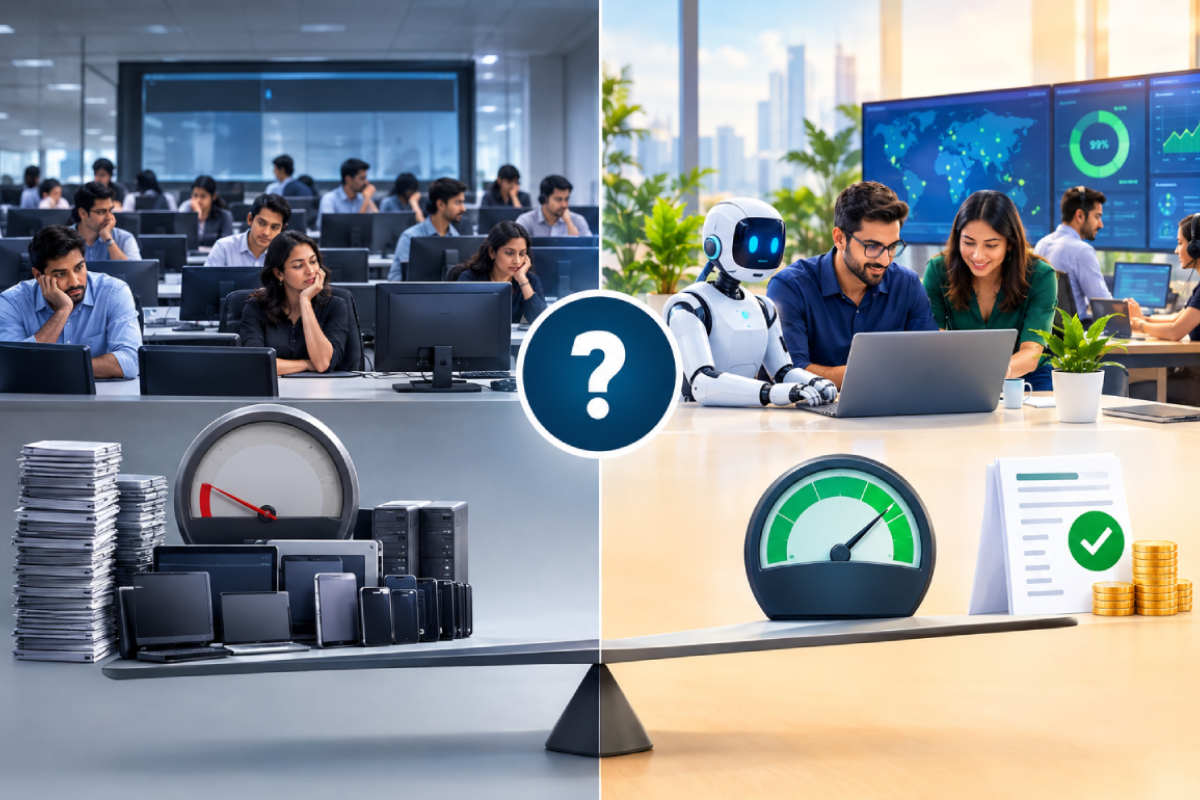
Key takeaways Most managed IT services are priced on inputs: devices, users, hours or a fixed bundle. Each model suits a different kind of organisation, and each has a blind spot. Input-based pricing is usu...
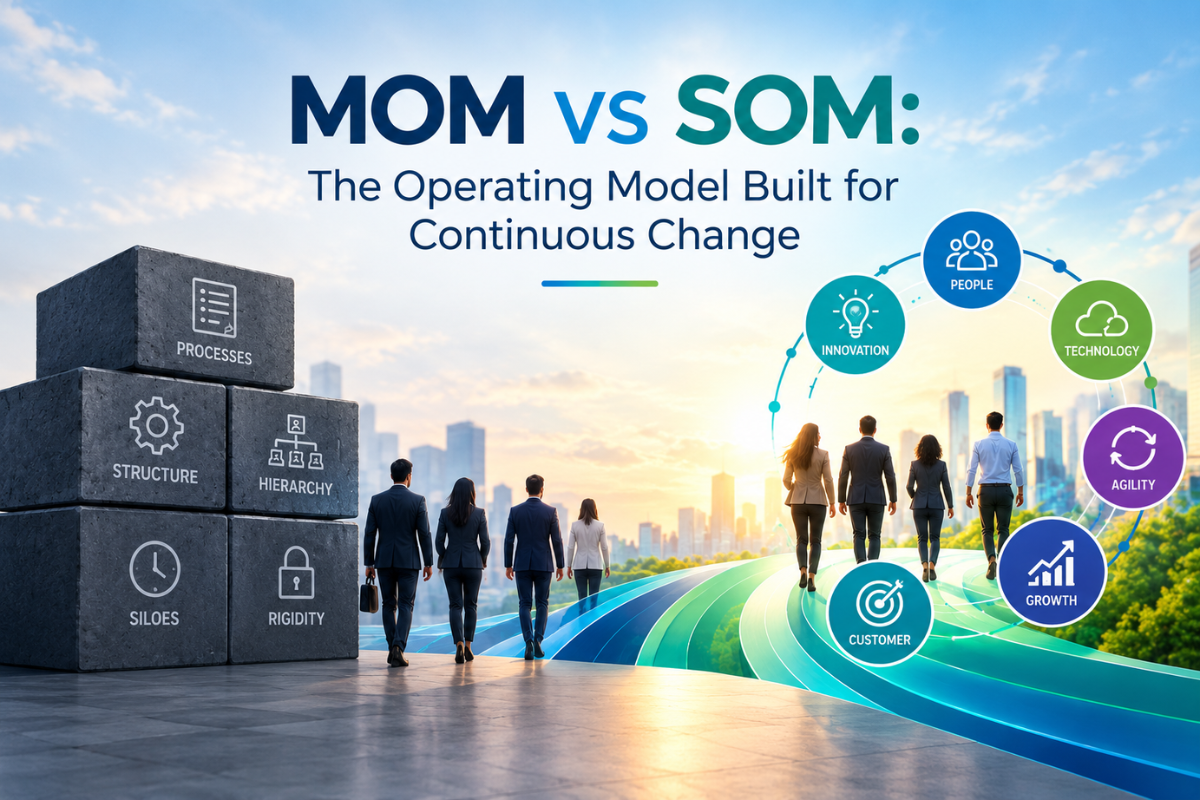
Key takeaways A Static Operating Model (SOM) is redesigned on a multi-year cycle; a Mutable Operating Model (MOM) is designed to be restructured continuously. MOM is only operationally possible because of ...