

Key takeaways
- An AI Managed Services Provider engineers the human/digital-worker split into the delivery model from day one,a traditional MSP with AI features bolted on doesn’t.
- Allied’s FusionWork™ model resolves 84%+ of incidents at first touch with zero human involvement,a live operating figure, not a target.
- The commercial model has to change alongside the delivery model, which is why our Digital Human Rights Agreement (DHRA™) makes the no-layoffs commitment contractual, not aspirational.
Every managed services provider now says it “uses AI.” Almost none of them have changed the operating model underneath the sales deck. Ticket routing gets a chatbot. Reporting gets a dashboard. The headcount-to-ticket ratio stays exactly where it was five years ago, just with a thinner AI layer painted over the top.
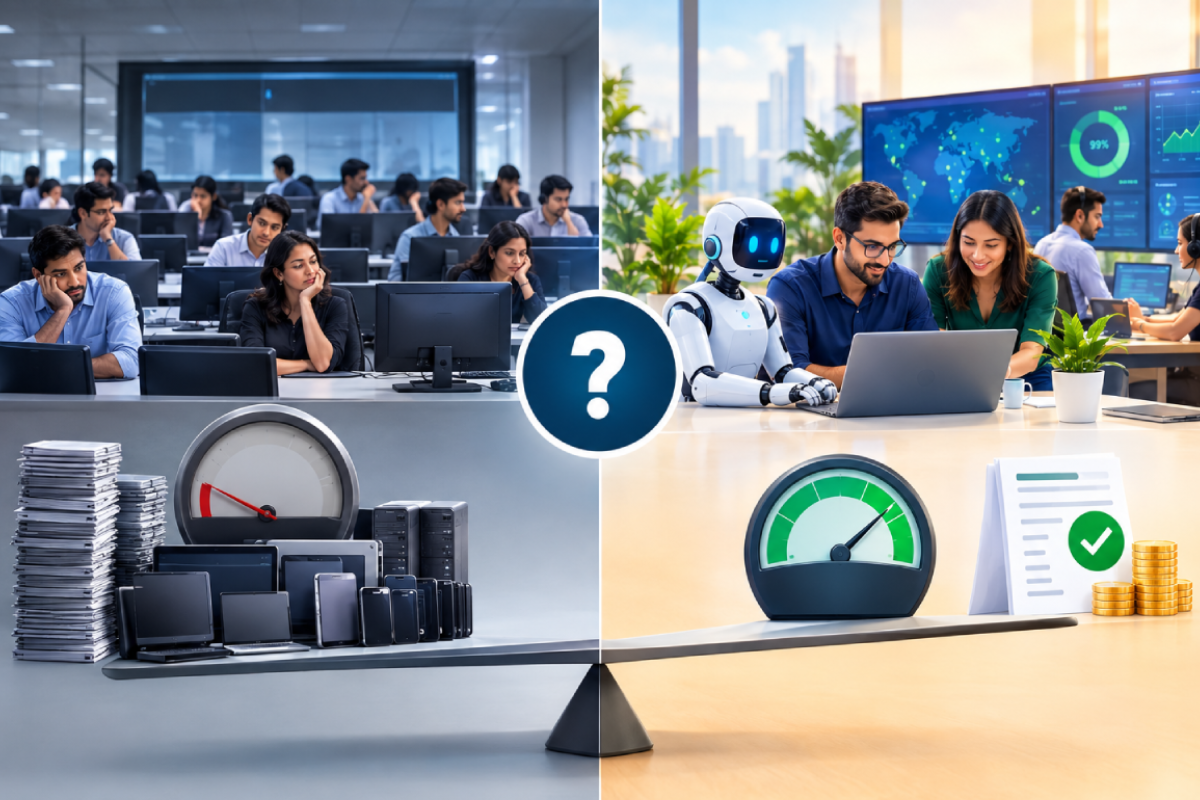
That’s the gap between “an MSP using AI” and an AI Managed Services Provider. One bolts automation onto an existing labour model. The other is built around a different question entirely: which work should a person do, and which should a digital worker do, by design, not by exception.
What is an AI Managed Services Provider?
An AI Managed Services Provider is an organisation that delivers IT and business process operations through a fused workforce of human specialists and digital workers, with the split between the two engineered into the delivery model from day one,not retrofitted after the contract is signed.
At Allied, we call that fused delivery model FusionWork™. Routine, pattern-based work, password resets, standard provisioning, first-line triage, known-error resolution, resolves through digital workers without a person touching the ticket. Everything that needs judgement, context, or a relationship escalates to a human specialist who is free to focus on exactly that.
The result isn’t a marginal efficiency gain. In our EMEA service desk operations, digital workers now resolve 84%+ of incidents at first touch, with no human intervention required. That’s not a target; it’s a live operating figure, and it’s the clearest evidence that the category is real and not a rebrand.
How the fusion actually works
The mechanics matter more than the marketing term. A FusionWork™ deployment starts with a full workload audit, every ticket type, its volume, its resolution pattern, and how much judgement it genuinely requires. That audit produces a classification, not a guess: which categories are pattern-based enough for a digital worker to own outright, which need a digital worker to triage and a human to close, and which stay fully human from first contact.
- Digital-worker-owned: password resets, standard access provisioning, known error fixes, routine monitoring alerts, status queries.
- Digital-worker-triaged, human-closed: multi-system incidents, anything touching a VIP user or regulated data, tickets that don’t match a known pattern within a defined confidence threshold.
- Human-owned from first contact: security incidents, major outages, anything requiring a judgement call with business consequence.
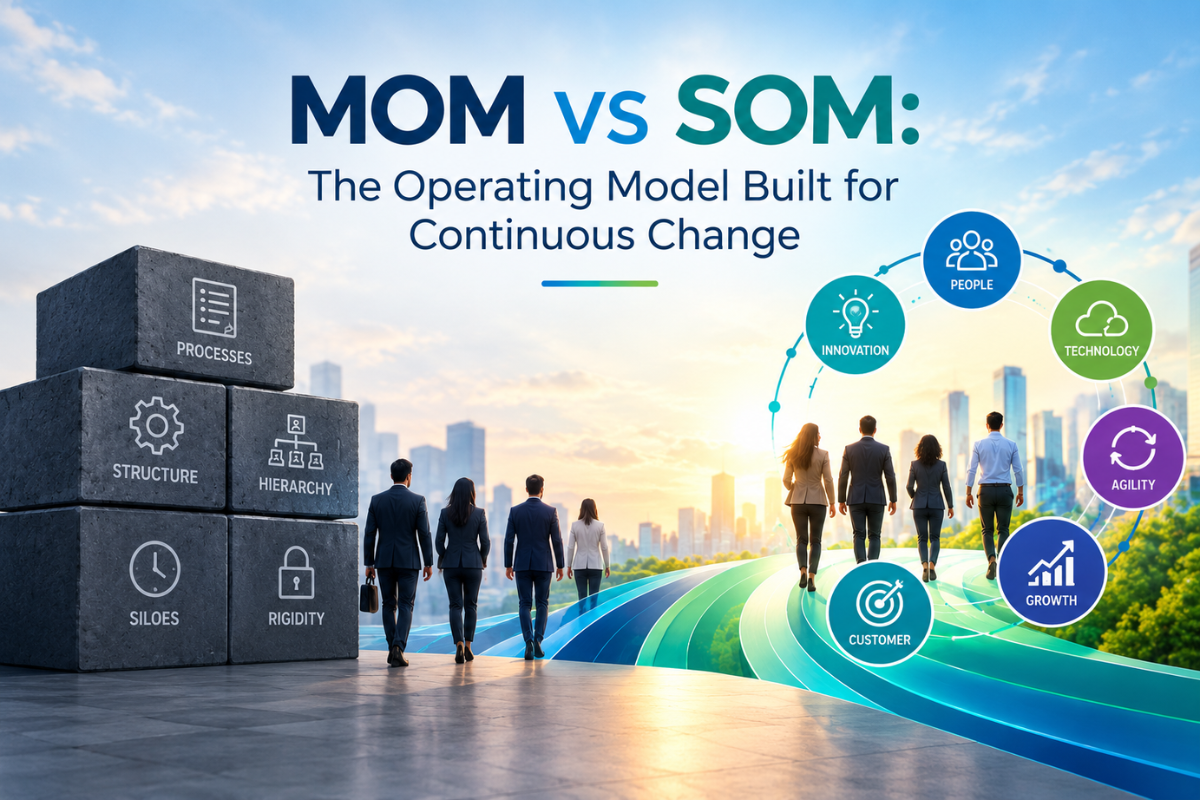
That classification isn’t static. Ticket patterns shift as the environment change, so the split gets re-audited on a cycle, not set once and left alone. This is also the mechanism behind the Mutable Operating Model concept we use elsewhere in our work, the resourcing model is designed to move with demand, not against it.
Picture what this looks like on an average Tuesday. A digital worker resolves a batch of overnight password-reset requests before the first specialist logs on. Mid-morning, a spike in tickets referencing a single application points to a known issue; the digital worker matches the pattern, applies the documented fix, and closes the batch automatically, flagging the volume spike to a specialist for root-cause review rather than making them triage each ticket individually. A handful of tickets that don’t fit any known pattern,an unusual combination of symptoms, a VIP escalation, something genuinely new,land directly with a human specialist, pre-populated with the diagnostic context the digital worker already gathered. Nobody on the human side spent the morning on password resets.
The economics: why the split changes the invoice, not just the ticket queue
The efficiency case for FusionWork™ isn’t just operational; it changes what a client should expect to pay, and why. A traditional MSP prices a contract against a fixed team sized to handle peak demand, which means the client is paying for capacity that sits idle most weeks. When digital workers absorb the bulk of routine volume, that fixed-headcount sizing logic stops making sense, the human team required to run the account shrinks to match the genuinely judgement-heavy remainder of the workload, not the full ticket volume.
That’s the direct link between FusionWork™ and Allied’s Flexible Resource Architecture (FRA™): clients running both together typically see 30–40% cost reduction against a comparable fixed-headcount contract. It isn’t a discount applied to the same delivery model; it’s a different-shaped cost base, because the underlying operating model is genuinely different, not just marketed differently.
Why the distinction matters
PwC’s Sizing the Prize Research puts the global economic opportunity from AI at $15.7 trillion by 2030. Very little of that value sits in dashboards, and copilots layered onto legacy delivery. It sits in operating models that were redesigned around what AI can now do, which is precisely the space an AI Managed Services Provider occupies, and a traditional MSP, by definition, does not.
That’s also why the commercial model has to change alongside the delivery model. Allied’s Digital Human Rights Agreement (DHRA™) is our contractual commitment that this shift never costs people their jobs; digital workers absorb the routine load, and the humans they free up move into judgement, exception-handling and continuous improvement work, not redundancy.
A framework for evaluating any provider’s AI claims
Most procurement conversations about “AI managed services” never get past the marketing layer. Five questions tend to separate a genuine AI Managed Services Provider from an MSP with an AI feature bolted on:
- What percentage of tickets resolve with zero human touch, and is that measured, or estimated?
- Was the human/digital split designed against your actual workload, or applied as a generic template?
- What happens to the people whose tickets get automated, is there a contractual commitment, or a verbal assurance?
- Does the pricing model reflect the efficiency gain, or does the fixed-headcount invoice stay the same with “AI” added to the description?
- Can they show a live, current resolution-rate figure, not a case study from three years ago?
If a provider can’t answer the first two with specifics, the “AI” in their AI-managed services is doing more work in the sales deck than in the delivery model.
Common signs you’re paying for AI-washed MSP services
A few patterns show up reliably when the AI is cosmetic rather than structural. The automation only covers the tickets that were already easiest to resolve manually, meaning the harder 80% of the workload sees no change at all. The headcount on the account doesn’t move regardless of ticket volume trends, quarter over quarter. Any AI-driven efficiency gets absorbed as provider margin rather than passed through as lower cost or better service, because the commercial model was never redesigned to reflect the new delivery model underneath it. And reporting emphasises activity – tickets touched, dashboards viewed – rather than the one number that actually matters: what percentage is resolved without a person.
What good looks like: KPIs to expect
A genuine AI Managed Services Provider engagement should be measurable against a small set of concrete figures, not adjectives. First-touch resolution rate with no human involvement, tracked continuously, not sampled quarterly; we hold ourselves to 84%+.
Escalation quality: how often a ticket that does reach a human specialist is genuinely judgement work, versus a digital worker’s near-miss that should have been caught automatically. Time-to-resolution split by category, so it’s visible whether the human-owned queue is actually shrinking to genuinely complex work rather than quietly absorbing overflow. And workforce outcome tracking: what actually happened to the people whose routine work got automated, which is where a DHRA™-style commitment either shows up in practice or doesn’t.
Conclusion
If your provider’s AI story is a feature they added, ask what changed underneath it. If nothing did, you’re paying an AI premium for an MSP that still runs on the old ratio of people to tickets. An AI Managed Services Provider is a different model, not a different marketing line.
Want to see what FusionWork™ looks like against your own ticket volumes? Get in touch and we’ll walk you through the model.
Frequently Asked Questions (FAQ)
Is an AI Managed Services Provider more expensive than a traditional MSP?
Usually the reverse, once the model is running at scale. Because digital workers absorb the routine load, clients moving to Allied’s FusionWork™ model alongside our Flexible Resource Architecture (FRA™) typically see 30–40% cost reduction against a comparable fixed-headcount contract,not from cutting service quality, but from no longer paying for idle capacity sized to peak demand.
Does this replace my internal IT team?
No, it changes what routine work your team spends time on. Organisations that run FusionWork™ alongside an internal team typically see their people freed from first-line, pattern-based tickets to focus on projects, architecture and the judgement-heavy incidents that actually need a person.
How is FusionWork™ different from RPA or scripted automation?
Traditional RPA automates a fixed, scripted sequence of steps and breaks when the underlying process changes even slightly. Digital workers in a FusionWork™ model operate against a classification of ticket types with a defined confidence threshold, escalating anything outside their pattern rather than failing silently,and the classification itself gets re-audited as the environment changes, rather than requiring a separate re-scripting project every time something shifts.
How long does it take to stand up a FusionWork™ deployment?
The workload audit that defines the human/digital split is the long pole,it needs enough historical ticket data to classify patterns reliably. Most deployments move from audit to live digital-worker ownership of the first ticket categories within weeks, then expand category by category as confidence builds, rather than switching on the full model in one step.
What happens if our ticket volume changes significantly after deployment?
The classification is reviewed on a defined cycle specifically because environments change,new systems, new ticket patterns, seasonal shifts. It isn’t a one-time setup that goes stale.