
Key takeaways
- A digital worker is software that carries out a defined piece of work end to end, such as resolving a password reset or processing an invoice. It does tasks; it isn’t a person.
- A digital twin is a digital representation of something real. An Enterprise Digital Twin represents an organisation’s systems and processes. A human digital twin represents one person’s skills and knowledge, and in Allied’s model, DigitalMe℠, that person owns it.
- Digital workers and digital twins work best together, and neither should replace people. Under DHRA™, Allied’s digital workers take on tasks, not jobs.
Three phrases are turning up in every conversation about AI at work: digital workers, AI employees and digital twins. They’re often used as if they mean the same thing. They don’t, and mixing them up leads to bad decisions, from buying the wrong technology to frightening the very people you need on side.
This guide explains what a digital worker is, how it differs from a digital twin, and how the two fit together in a workforce where people stay at the centre.
What is a digital worker?
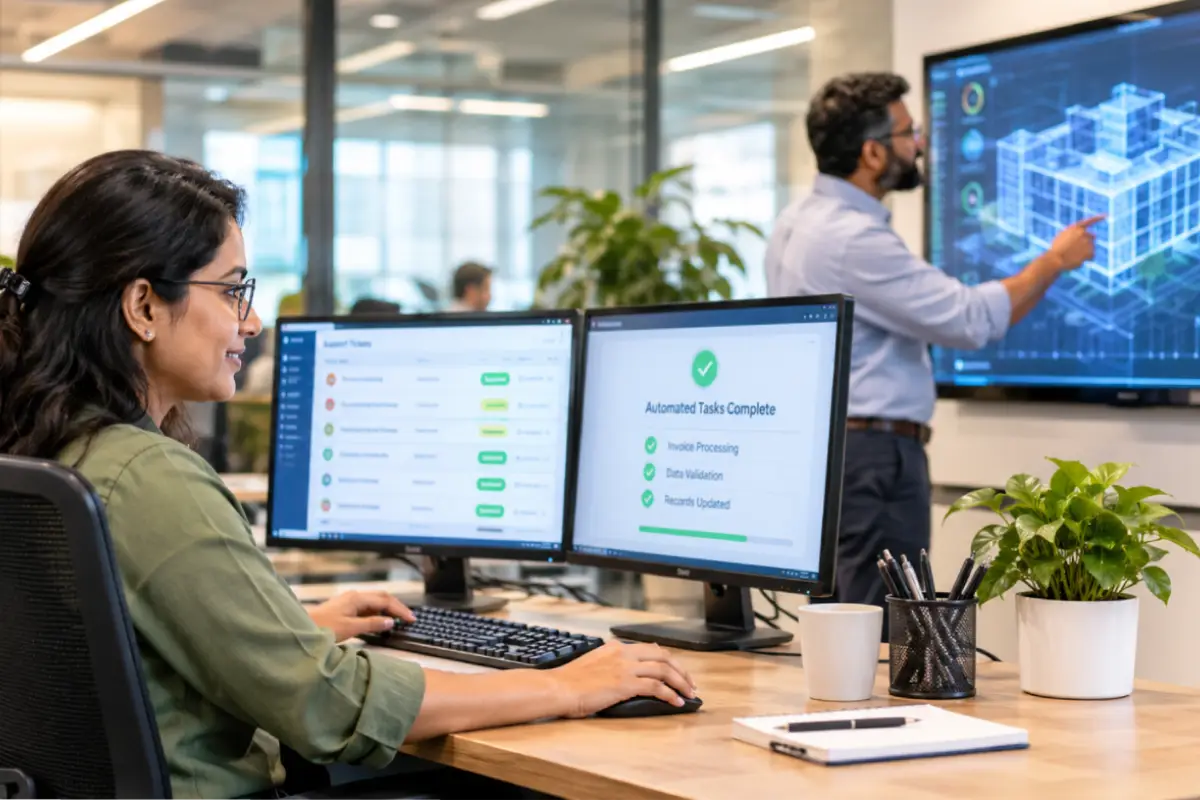
A digital worker is a piece of software that carries out a defined unit of work from start to finish, the way a person in that role would. It combines automation with AI capabilities, such as understanding a request written in plain language, so it can take a task, complete it, check the result and hand anything it can’t handle to a person.
The term used to mean something else. A “digital worker” was once simply an employee with strong digital skills. Today it almost always means software that does work, not a person who uses software.
What can a digital worker do?
Digital workers suit work that is repeatable, rule-based and high in volume. Some typical examples:
- IT support: resetting passwords, granting standard access, installing approved software and fixing known errors.
- Finance: matching invoices to purchase orders, chasing missing documents and flagging exceptions.
- HR operations: setting up accounts for new joiners, answering policy questions and updating records.
- Operations monitoring: watching systems around the clock and acting on routine alerts before they become incidents.
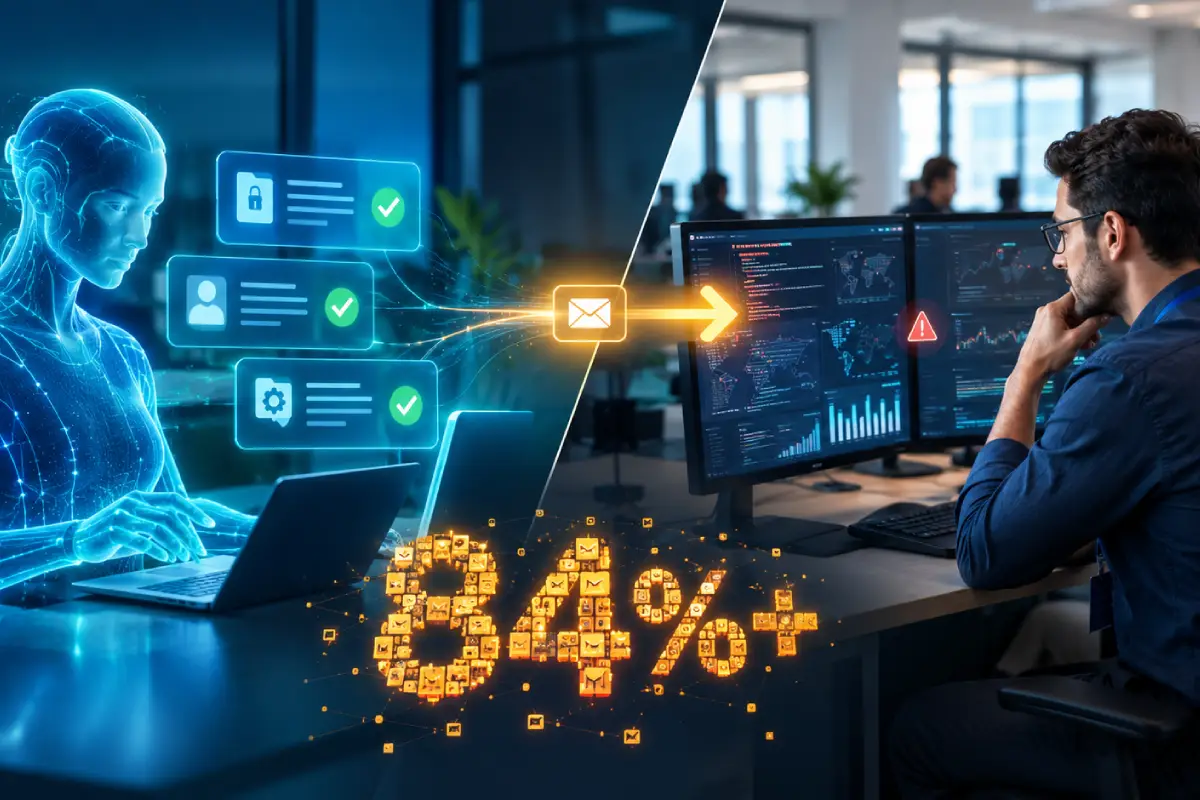
On an IT service desk, this is where the biggest change is happening. In Allied’s service desk operations, digital workers resolve 84%+ of incidents with no human involvement (Allied’s stated figure). Our guide to service desk automation shows how that works in practice.
Digital worker vs bot vs AI agent
These terms overlap, but the differences are useful:
| What it is | How it behaves | |
| Bot (RPA) | A script that repeats fixed steps | Follows the same sequence every time; breaks when the process changes |
| AI agent | AI that works towards a goal | Decides its own steps to reach an outcome; needs clear limits |
| Digital worker | A role-shaped combination of automation and AI | Owns a defined workload, completes it, checks the result and escalates what it can’t handle |
The practical difference is accountability. A bot runs a script. A digital worker is given a job to do, measured on whether it got done, and designed to hand over to a person when it isn’t sure.
Are digital workers “AI employees”?
You’ll see vendors describe their products as “AI employees”. It’s catchy, but it’s misleading. A digital worker has no judgement about context, no accountability for business consequences and no relationships. It takes on tasks. People still own outcomes.
The language matters because it shapes how teams react. Call software an “employee” and people hear “replacement”. Describe it as a digital worker that takes the repetitive part of their job, and the conversation becomes about what they’ll do instead.
What is a digital twin?
A digital twin is a digital representation of something real that stays in step with it. In business, there are two very different kinds:
- An Enterprise Digital Twin models an organisation’s systems, processes and workflows. It’s owned by the organisation and used to understand and improve how the business runs.
- A human digital twin represents one person’s professional capability: their skills, working knowledge and decision patterns. It can be consulted on that person’s behalf. In Allied’s model, called DigitalMe℠, the individual owns their twin, not their employer.
When people talk about an “AI digital twin” of a person, they usually mean the second kind. The important question isn’t what the technology can do. It’s who owns it.
Digital worker vs digital twin: the difference
| Digital worker | Enterprise Digital Twin | Human digital twin (DigitalMe℠) | |
| What it is | Software that does work | A model of the organisation | A model of one person’s capability |
| What it’s for | Completing defined tasks | Understanding and improving operations | Extending what one person can do |
| Who owns it | The organisation or its provider | The organisation | The individual |
| Acts on its own? | Yes, within set limits | No; it informs decisions | Only within limits the person sets |
| Example | Resets a password and closes the ticket | Shows how a process change affects service levels | Shares how a specialist usually diagnoses a fault |
Put simply: a digital worker does the work. A digital twin represents something, whether that’s a business or a person, so that work can be done better.
How digital workers and digital twins work together
The two become most useful in combination. Picture a service desk where a digital worker picks up an unusual infrastructure incident. It doesn’t match a known pattern closely enough to fix automatically, so it escalates. But before it hands over, it consults the DigitalMe℠ of a senior specialist who has handled similar incidents many times, with that specialist’s permission, and attaches their usual diagnostic approach to the ticket.
The engineer who picks it up starts with the expert’s context instead of a blank page. The specialist’s knowledge keeps creating value, for them, even when they’re not on shift. That’s the idea behind FusionWork™: human and digital workers designed to work as one, with each doing what it does best.
Will digital workers replace employees?
They don’t have to, and at Allied they won’t. Our DHRA™ (Digital Human Resource Architecture) carries a no-layoffs commitment: digital workers augment people; they don’t replace them.
In practice, digital workers take the repetitive, high-volume part of a role. The people who did that work move to what needs judgement, context and relationships: complex problems, improvement work and supporting customers. Where demand shifts, people are redeployed across teams and projects rather than made redundant.
This is also where the philosophy behind Allied’s model comes in. Original Augmented Intelligence (OAI), the founding principle set out by Allied founder Richard Skellett, holds that technology exists to augment human capability, not replace it. Digital workers and digital twins are two ways of putting that into practice.
How to introduce digital workers responsibly
- Start from the work, not the technology. Audit which tasks are genuinely repetitive and rule-based before choosing any tool.
- Design the hand-off. Decide when a digital worker must pass work to a person, and make escalation the default when it’s unsure.
- Be clear with your people. Explain what will change in their roles and what they’ll move on to. Put commitments in writing.
- Keep ownership clear. If you build digital twins of people, agree up front who owns them and what they can be used for.
- Measure outcomes. Track what digital workers actually resolve, how often they escalate correctly, and what people are doing with the time freed up.
Conclusion
Digital workers do tasks. Digital twins represent a business or a person. Used together, with clear ownership and a firm line on jobs, they give people more time for the work only people can do. The organisations that get this right won’t be the ones with the most AI. They’ll be the ones whose people trust how it’s being used.
Want to see where digital workers could take on work in your organisation? Talk to our team about our AI managed services and Human Digital Twin & DigitalMe℠ offerings.
Frequently asked questions
What is a digital worker in simple terms?
It’s software that completes a defined piece of work from start to finish, such as resetting a password or processing an invoice, and hands anything it can’t handle to a person.
Is a digital worker the same as an AI agent?
Not quite. An AI agent decides its own steps to reach a goal. A digital worker is shaped around a specific role and workload, often using AI agents and automation underneath, and is measured on whether the work gets done.
What is an AI digital twin of a person?
It’s a digital representation of someone’s professional skills, knowledge and working patterns that can be consulted on their behalf. In Allied’s DigitalMe℠ model, the person owns their twin and controls what it’s used for.
What’s the difference between a digital worker and a digital twin?
A digital worker does work. A digital twin represents something: either an organisation’s systems (an Enterprise Digital Twin) or a person’s capability (a human digital twin).
Will digital workers take people’s jobs?
They take tasks, not jobs, when they’re introduced well. Under Allied’s DHRA™, digital workers come with a no-layoffs commitment, and people move to work that needs judgement.